
1
We map the restricted tissue.
For fascia too tight to press flat: negative pressure lifts and decompresses the tissue so the layers underneath can glide again.
What It Is
Cupping uses negative pressure to lift and decompress tight fascia. Most hands-on work presses tissue down; cupping pulls it up, which gives the layers underneath room to glide again.
Cups go on the restricted area for a few minutes, sometimes while you move the limb, then we use the new mobility straight away with movement work.
It is useful precisely where direct pressure is too painful to tolerate. The circular marks are normal, they are not bruises, and they fade within a few days.
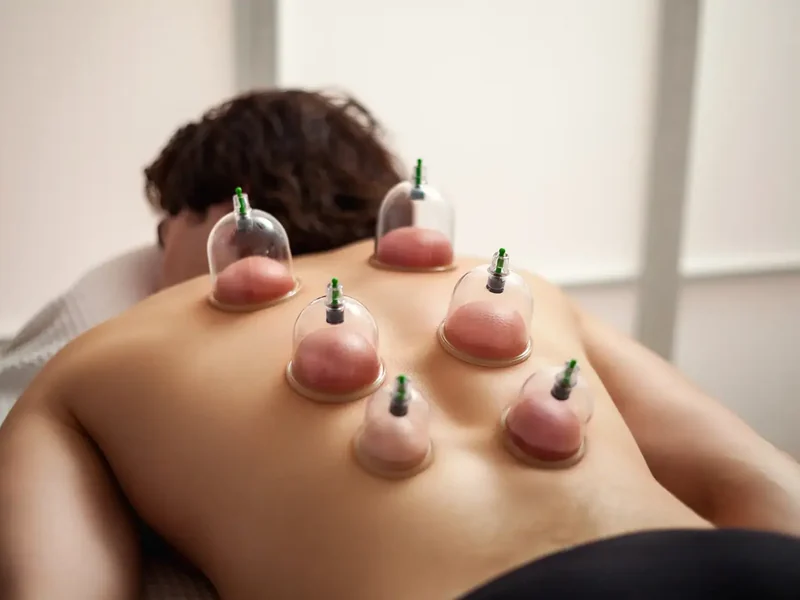 Always optional, never sprung on you
What It Helps
If a muscle feels locked no matter what you do, there’s a good chance a trigger point is the reason.
What A Session Looks Like
1
We map the restricted tissue.
2
Cups decompress the area.
3
We move through the new range.
Why It Works
Decompresses instead of squeezing.
Works where pressure hurts too much.
Immediate mobility change.
Fits the plan you are already on.
Pairs Well With
Questions, Answered
It feels like a strong pull rather than pressure. Most people find it comfortable. The marks that follow do not hurt.
They are a normal response to the suction, not bruising, and they fade in a few days. We will tell you where they will show before we start.
It depends on your plan: cupping is coded differently than a standard PT visit, and insurers don’t all treat it the same way. We verify your exact benefits before your first session, so there’s no surprise on your bill. Questions before then? Call us at (702) 876-9737.
Book Your Visit
Request a time and a real person calls you back, usually within two business hours. No phone tree. No ‘someone will reach out.’ Just a plan.
4.9 · 110+ Google reviews
Typical response: under 2 business hours
Step 1 of 5
That’s the hard part done. We’ll call during business hours to lock in your time. Most people are on the schedule same week.
Visit Us